

About 5.5 million foreigners live in Spain, more than a third of them from Latin American countries, according to official data. Recent changes in the immigration law will allow thousands of foreigners to work and reside legally in the European country.
With the modification of the Immigration Law, some requirements were made more flexible, new regularization figures were created and some sectors such as students benefitted. With the Law of Democratic Memory, Spanish nationality is granted to children and grandchildren of Spaniards who were exiled during the Civil War between 1936 and 1978. And the most recent of all is the new Law for Digital Nomads, aimed at people who want to work remotely from Spain.
STUDENTS
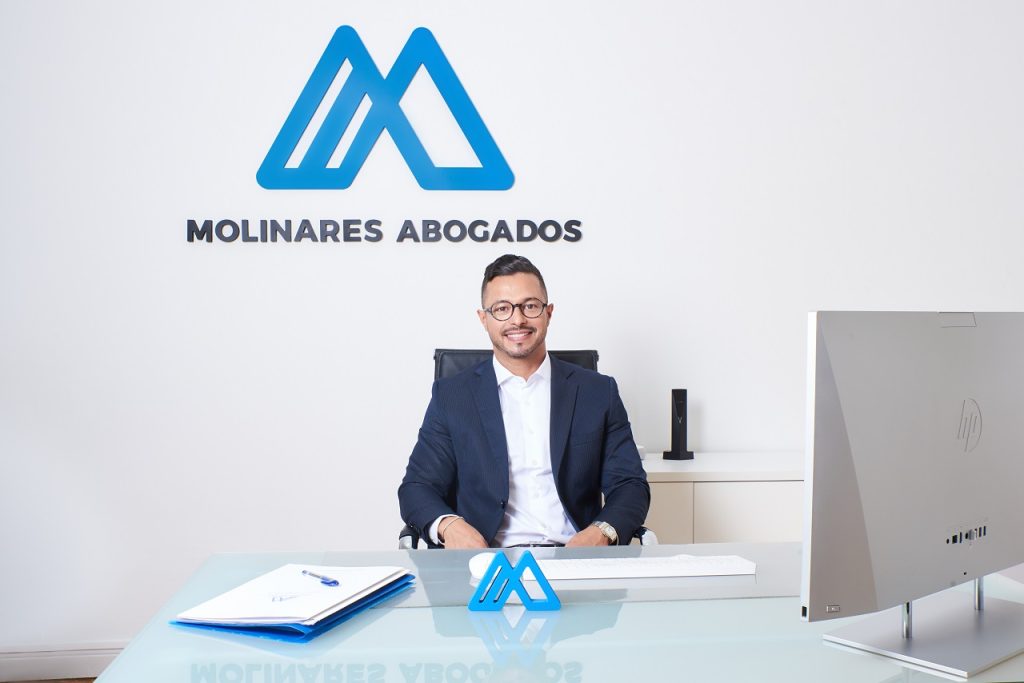
"Students now have a work permit for 30 hours and when they finish their studies they can apply for residency. Spanish nationality comes as an opportunity for many people who were left out of the previous law, thousands of people will benefit and will have the doors of Europe to migrate. And it opens the possibility of being able to work from Spain enjoying the experience of living in the country", explained to Forbes Iván Molinares, general director of Molinares Abogados, a firm based in Madrid.
Adriana María Barba, of the firm Vázquez & Barba International, also points out that with the modification of the Immigration Law in 2022, the processes for obtaining a residence and work permit are simplified. "It is important to keep in mind that not all study programs in Spain grant the documentation to apply for a student visa. Once admitted to the study center and the specific program, the applicant obtains a residence permit that allows him/her to stay in Spain for the duration of the studies. We are not talking about a permanent residence permit, so when counting the years necessary to obtain permanent residence, the years lived under the student visa do not count, nor for Spanish nationality".
In addition to being able to legally work 30 hours per week, students will be able to stay an additional year without having to request an extension of stay in Spain.
FAMILY REUNIFICATION
Another of the novelties, which will improve the life of foreign families in Spain, corresponds to family reunification.
"Regarding family regrouping, it is necessary to distinguish whether it is the General Alien Regime or the Community Regime. In General Regime is the authorization granted to the relatives of foreigners who have resided in Spain for at least one year on a regular basis and have obtained authorization to reside for at least another year, in order to regroup their relatives," Molinares highlights. "While the regrouping under the Community Regime is a residence permit that can be requested by non-EU family members of a Spanish citizen or of another Member State of the European Union, when they join or accompany him/her, and are going to reside in Spain for a period of more than three months".
SOURCING
The reform of the Regulations to the Immigration Law provides for a much more flexible hiring of non-EU foreigners, with a reduction of deadlines, to prove the insufficiency of applicants for the job offer.
"It is contemplated to expand the catalog of professions that are difficult to cover in order to find jobs in Spain adjusted to the economic reality of Spain. The list is updated quarterly by geographical area, according to the needs of each province and autonomous community. However, the catalog of hard-to-fill occupations for the first quarter of 2023 continues to maintain the same jobs prior to the reform," comments Molinares.
ROOTS BY TRAINING
This is a new figure created by the Regulation of the Immigration Law, which seeks the regularization of foreigners who have been in Spain for at least two years on a continuous basis and who are interested in training in Spain so that once they have completed their training they can access the Spanish labor market, in a job related to their studies.
"Once the training has been passed and during the validity of the residence permit, the interested party may submit an application for a residence and work permit to the Aliens Office by providing an Employment Contract," Molinares stresses.
DIGITAL NOMAD LAW:
It is a law that seeks to attract talent and investment through the creation of ecosystems favorable to the establishment of entrepreneurs or remote workers.
"Foreign nationals from countries that are not part of the European Union can telework from Spain and, in addition to being able to develop their work or professional activity remotely, they will have the opportunity to live in a European country like Spain", says Molinares. "It brings tax benefits for entrepreneurs, workers, investors and reduction of administrative obstacles and ease in obtaining visas".
For those who plan to emigrate to Spain, Molinares recommends to make a programmed and organized migration plan in order to make a legal migration to Spain, to seek legal immigration advice prior to arrival in Spain in order to have a legal accompaniment in the process and to know the different permits of stay and/or residence that can be applied for in Spain and outside Spain and their requirements, in order to choose the one that best suits the circumstances and personal, family and economic interests of the interested party and his or her family unit.

INVESTMENT
The Golden Visa is one of the most used migration alternatives by Colombians. This is aimed at those foreigners who are interested in entering Spanish territory in order to make a significant capital investment, if this is the case, they may apply for a stay visa or, if applicable, a residence visa for investors, Adriana María Barba, from the firm Vázquez & Barba International, explains to Forbes.
"The law enables foreign persons who make an investment in Spain, to obtain residence for themselves and their family members- spouses and minor children - and without the investors being obliged to remain in Spain for 183 days a year in order to renew such residence requesting as the only requirement for renewal the maintenance of the investment."
Who can obtain a Golden Visa?
In the case of Spain, the person who can obtain an authorization or visa as an investor is a person who has made a purchase of one or more homes with a total value of 500,000 euros or more, 1,000,000 euros in stock market shares or 2,000,000 euros in foreign debt. These amounts vary for other European countries. So, investment for this type of residence is the main requirement.
What is the duration of the Golden Visa?
The initial residence permit as an investor has a duration of 2 years and allows us to reside in Spain legally and without restrictions to travel, live and work. The visa only requires the applicant to travel to the country once a year. It provides full freedom of movement throughout the Schengen area, i.e., most of the countries of the European Union, plus certain others.
COLOMBIANS IN SPAIN
After the United States, Spain is the country to which most Colombians seek to migrate. The language, the proximity to the culture, and the shared history make these links very attractive to Colombians.
Even despite the country's current economic situation, which places it as one of the nations with the highest unemployment rate in the Eurozone (13.65%), Spain remains one of the leading global economies. The country has grown above the European average consistently since 2015 being one of the fastest growing economies in Europe.
According to data from the firm Vázquez & Barba International, Colombian families generally look for a property that qualifies them as Golden Visa applicants, which is the one that "allows foreign entrepreneurs and investors interested in residing in Spain. This visa allows the beneficiary and his family to reside legally in Spain, and to travel through the countries of the Schengen area without the need of a visa".
20 RECOMMENDATIONS FOR THOSE EMIGRATING TO SPAIN
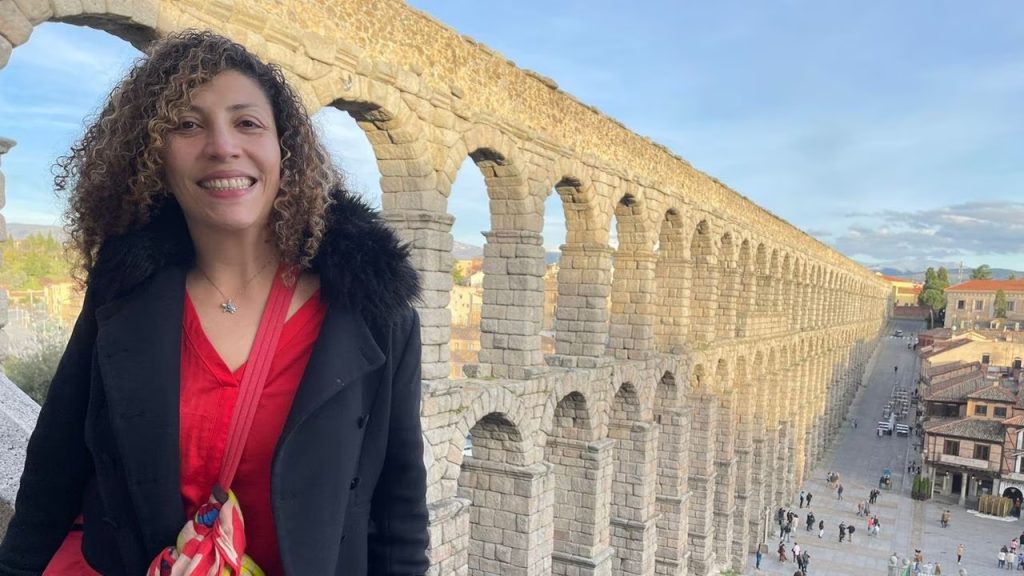
Natalia Marenco, creator and advisor of Te Guío Madrid, presented 20 recommendations for those planning to emigrate to Spain:
Before traveling:
- Do the math right: Create a realistic budget about the expenses you will have: rents, food, transportation, entertainment, utilities, among others. Also, take into account all the money you need to meet the requirements of, for example, renting an apartment.
- Leave a broad and sufficient power of attorney in Colombia: To that person you trust to help you solve banking, administrative or other issues. This is done in a notary's office and the authorized person can take out the power of attorney every time he/she has to help you with something. Do not forget to notify the bank that you will be traveling and change the bank's security notifications, so that they do not reach you by phone, but by mail, this way you will avoid having your account blocked.
- Bring all your economic certificates: They are the guarantee to be able to rent an apartment or room, and to avoid that they block your recently opened Spanish bank account. Bank statements and certificates, work contract and last income tax declaration are useful to prove where the money you move in the country comes from, and that you have the support to pay for your housing.
- If you are traveling with your school-age children: Find out the school calendar and the admissions process for public and private education. In addition, you must bring the grades validated by the Secretary of Education of your city, so that they can enter the school at the corresponding grade without any problem.
- Avoid paying in advance for apartments: there are many scammers who ask for advance payments to "reserve" the apartment. If you are going to look for a place to rent for a short stay for your arrival, do it through official websites (idealista, AirBNB, Booking.com) or with recommended people.
- Take with you what you need: And one of the ways to do it efficiently is to prioritize the clothes for the season you are arriving in. If it's winter, swim dresses or short skirts are unnecessary. If you arrive in summer, boots and coats will not be used. As the year progresses, you will be able to buy (there are good second-hand stores or discounts) the clothes you need.
Upon arrival
- Empadronate: As soon as you have your place of residence, you must go to the town hall offices to register. This step is vital to prove how long you have lived in the country.
- Be a tourist in your city: Amidst the chaos and stress that arrival can become, taking a few days to walk around or go to a museum (check for free admission days and times) will help you connect with what will be your new city.
- Get your digital identity: It will help you to carry out procedures in a very simple way on the Internet.
- Listen to your body. When you migrate, you can get sick. Whether it's the weather, the water, the changes. It's normal, don't worry, but keep your insurance medical directory handy to make appointments when you need them.
- Limit yourself in expenses during the first months: Arrival can be expensive, do not make big expenses -like renting a long term car- without first knowing how your finances will be during your stay in Spain.
- Look for like-minded groups: Whether on social networks or through friends, so you can start building a circle of friends in your new place.
- Get your personalized Metro card: And save by traveling on the public transport system. Madrid's system is one of the best in Europe and Valencia's Metro runs 24 hours, to cite 2 examples.
- If you decide to have your own car: you can drive with your Colombian pass for 6 months, however, you must change it to avoid traffic fines. By agreement between Colombia and Spain, you do not need to take the course to exchange your driver's license.
Money management
- Paying with datáfono has no cost: This alleviates costs when we need to pay for something with our money in Colombia. They receive debit card payments from €1 in kiosks, cabs and even buses.
- ATMs do not charge the same: some ATMs charge between €4 and €7, others the equivalent of $5,000 Colombian pesos. Identifying the cheapest ones helps to save.
- Streaming and music application licenses are cheaper in Colombia: if you can keep them in your home country, since the value in euros can be much higher.
- Free competition for public services: if you rent a house, you can choose the gas and electricity service operator and switch to the one that offers you the best rates and benefits, thus saving money.
- Save on water: in many cities in Spain there are drinking water fountains where you can refill your water thermos.
- Do your research on tax issues: In Spain the Hacienda is extremely picky (let Shakira say so), it's better to be clear on whether or not you should file taxes, when and how. It is better to have that peace of mind than to pay fines.