
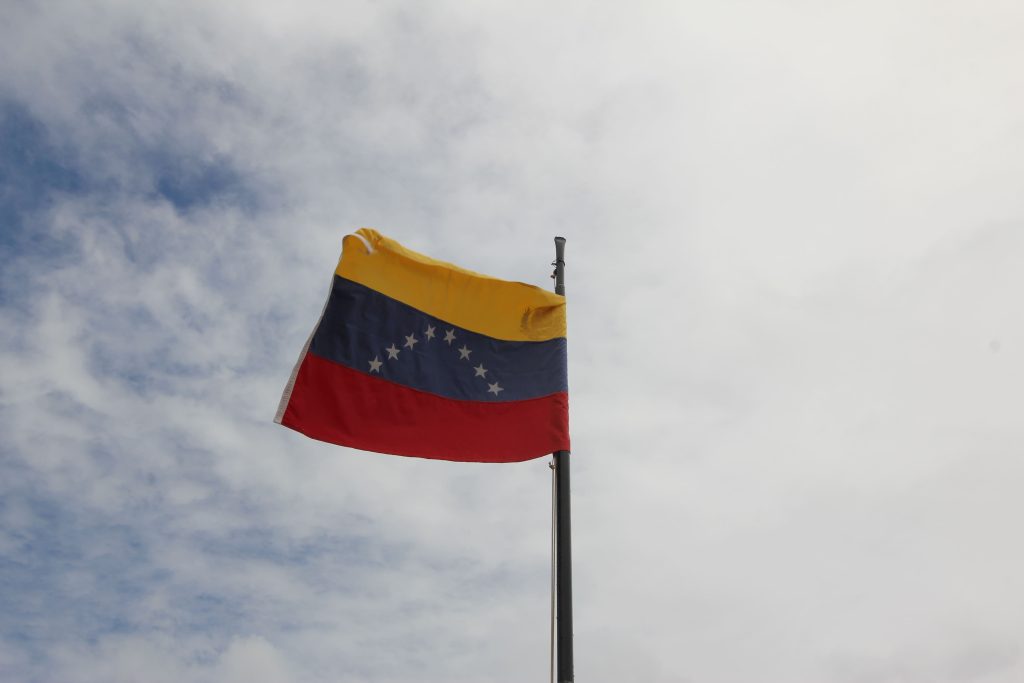
In this opportunity we will analyze the resolutions issued by the Interministerial Commission for Asylum and Refuge - Ministry of the Interior, on the occasion of the requests for international protection made by thousands of people who have Venezuelan nationality, all this under Law 12 of 2009, of October 30, 2009, regulating the right of asylum and subsidiary protection.
Thus, we begin our analysis by stating that from the moment the interested party submits his application for international protection and it has been admitted for processing, and once the investigation of the case has been completed (3 years or more may pass), it is studied by the Interministerial Commission on Asylum and Refuge, which in this particular case denies the granting of the right of asylum and subsidiary protection to the interested party and authorizes his stay in Spain in accordance with the provisions of Article 37.b. of Law 12 of 2009, of October 30, 2009, for reasons of international protection.
The following legal grounds must be taken into account in order to understand the Asylum and Refugee Commission's reasons for reaching this decision:
- Pursuant to the provisions of Article 24.2 of Law 12 of 2009, of October 30, 2009, the Ministry of the Interior is responsible for granting or denying the right of asylum or subsidiary protection.
- Likewise, the head of the Department is responsible for authorizing the stay in Spain in accordance with the provisions of Article 37.b) of Law 12 of 2009, of October 30, 2009, for reasons of international protection, to those interested parties who have been denied the right to asylum or subsidiary protection.
- Various sources are consulted on the situation of the country - Venezuela, to determine the situation of vulnerability of its nationals, among other issues, the protection of human rights, the migratory flow, humanitarian crisis, international protection orientation for Venezuelans are reviewed.
This is why, for the analysis of the requests submitted by the vast majority of Venezuelans, this country is immersed in a convulsive situation in which multiple economic, social and humanitarian crises concur, undoubtedly affecting all areas acutely and jointly, the above, according to the Organization of Ibero-American States (OAS) in the report approved by the Inter-American Commission on Human Rights of December 31, 2017, on the human rights situation in Venezuela.
There is an institutional detriment in this country, which reaches several spheres of the judicial, legislative and executive power, given the climate of political confrontation, repressive activities have been detected, as well as violations to the free development of its nationals, even endangering the general welfare.
Furthermore, in Venezuela there is an unprecedented economic crisis in which shortages have been compounded by exorbitant hyperinflation, and this has resulted in the exodus of thousands of people and families who have sought a better future in many countries, including Spain, Colombia and even the United States of America.
In most of the cases presented to the Asylum and Refugee Office, it is understood that the applicants are fleeing their country, however, after an individual analysis, it is found that in some cases:
- There is insufficient evidence to fundamentally establish an objective fear of being potentially persecuted as a result of his political ideology.
- In most cases, there is no indication that the applicant would face the death penalty or the risk of physical execution, nor in the vast majority of cases is there a risk of torture or inhuman or degrading treatment in the event of return to his or her country of origin.
- There is no situation of international or internal armed conflict in Venezuela.
- For these reasons, none of the causes that could give rise to the granting of subsidiary protection in accordance with the provisions of Article 10 of Law 12/2009 of October 30, 2009, are present, and therefore the granting of subsidiary protection is denied.
Likewise, it is worth mentioning that Article 37 of Law 12 of 2009, of October 30, 2009, determines that the denial of international protection will entail, as appropriate:
- The return.
- The return.
- Expulsion.
- Mandatory departure from Spanish territory.
However, it establishes as an exception to this general criterion that their stay or residence in Spain is authorized for humanitarian reasons determined in the regulations in force, with this, and in accordance with the provisions of Article 125 of the Regulation of Law 4/2000, of January 11, on the rights and freedoms of foreigners in Spain and their social integration, approved by Royal Decree 557/2011, of April 20, allows the granting by the Ministry of the Interior, at the proposal of the Interministerial Commission on Asylum and Refuge, of a temporary residence permit for reasons of international protection.
With all this, taking into account the social and economic circumstances in connection with the application and the specific conditions in the country of origin, it would reasonably appear to be very difficult to access food, medicine, or housing in case of return. Thus, the general context of insecurity in the country of origin would not be compatible with the enjoyment of the inherent rights of the person making the application, as it is considered that the personal situation of the applicant would be seriously worsened by the return, justifying the application of humanitarian protection measures.
The Audiencia Nacional has also adopted a similar interpretation in relation to the applications of some Venezuelan nationals (AN judgment of 26 June 2018 n. rec. 628/2017). According to this line of jurisprudence, it is possible that cases of conflict or systematic violation of basic or primary rights of persons, which have no place in asylum or subsidiary protection, do have a place in the concept of humanitarian reasons. In Venezuela there is a situation of generalized crisis... All this apart from the problems of basic rights such as health and food, being especially worrying the situation of particularly vulnerable groups such as the elderly, people undergoing treatment or children.
Therefore, in the vast majority of cases presented by Venezuelan nationals to the Asylum and Refugee Office, authorization for temporary residence in Spain is being granted for reasons of international protection of a humanitarian nature.
The foreign citizen, now a legal resident, will be able to:
- Apply for the issuance of an Alien Identity Card
- To move freely within the European Union countries.
- Apply for Spanish nationality by residence (2 years of legal, continuous and uninterrupted residence).
Now, it is necessary to mention that this residence authorization is granted for 1 year, being able to be renewed or modified to the general regime of residence and work. That is to say, in case the same situation that gave rise to the granting of the residence authorization persists, it may be renewed, or otherwise, our recommendation is to modify the residence to go from the exceptional circumstance to the general regime of residence and work in any case, being necessary to evaluate each case in particular to determine the way that best suits the personal, labor and family conditions of the holder of the residence.
Finally, if you are in this situation, you are a holder of a residence permit and you want to know if you should renew or modify it, we recommend you to write us through our FREE WEB CONSULTATION service, you will receive a detailed advice about your case and the pertinent recommendations.

We invite you to leave us your opinion and comments below.


Love the site- very individual friendly and whole lots to see!